
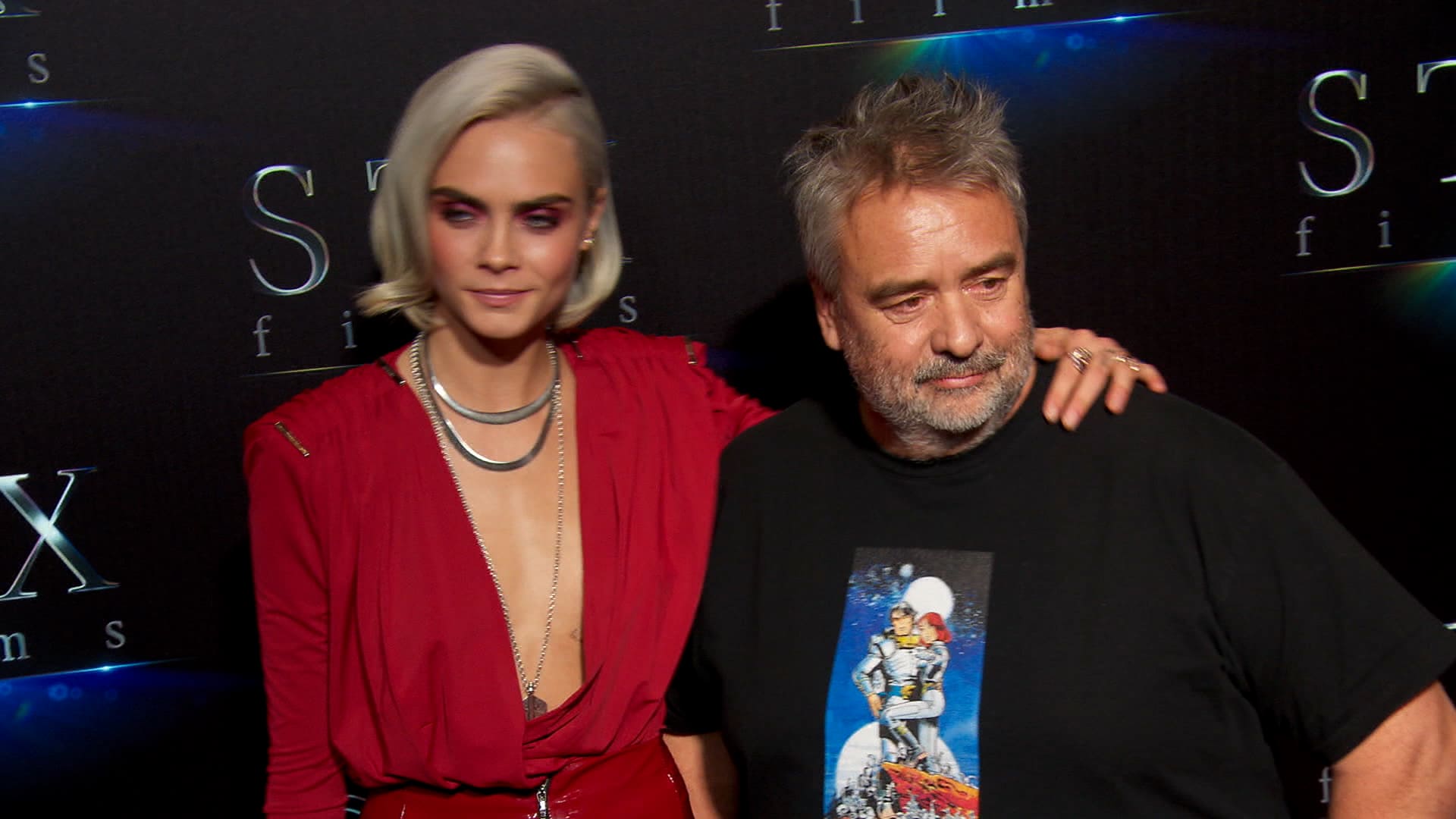
Luc Besson has spent decades creating films where bold visuals, heightened worlds and unconventional characters collide. Born in Paris in 1959, the French writer and director became particularly associated with action and science fiction, developing a filmmaking style that could move between intimate character stories and extravagant spectacle. From Subway and The Big Blue to La Femme Nikita, Léon The Professional and The Fifth Element, his work has frequently combined striking imagery with characters navigating dangerous and unusual environments.
An important influence arrived long before Besson began making movies. As a child, he became fascinated with comic books, finding their combination of illustrations and words easier to engage with than traditional books. Besson has explained that reading prose could send his imagination wandering away from the page. Comics worked differently. Their drawings gave him a visual starting point, allowing him to enter the image and begin inventing stories around what he saw.
That relationship with visual storytelling became particularly apparent in The Fifth Element. Released in 1997, the science fiction adventure created a colorful futuristic universe populated by eccentric characters, elaborate costumes and imaginative technology. Its heightened aesthetic reflected the kind of creative freedom associated with comic books, while its mixture of action, humor, romance and science fiction became characteristic of Besson’s approach.
His films have also frequently placed memorable women at the center of action driven stories. La Femme Nikita follows a convicted criminal transformed into a government assassin, while The Fifth Element makes Leeloo central to a battle for humanity’s survival. Later, Lucy starred Scarlett Johansson as a woman whose extraordinary transformation gives her increasingly powerful abilities. These characters helped make female led action an important recurring element of Besson’s filmography.
Besson’s influence extends beyond the films he has personally directed. As a screenwriter and producer, he helped create or develop numerous action projects, including the Taxi, Transporter and Taken franchises. His ability to generate concepts and build fast moving stories made him an important figure in French commercial cinema with a reach far beyond France.
Despite the fantastical worlds surrounding many of his characters, Besson has described writing as something driven by character rather than simply searching for a clever idea. Once a story begins, he focuses on what the character needs and allows those necessities to push events forward.
That philosophy helps explain the combination at the heart of his work. The settings may involve assassins, futuristic cities or extraordinary adventures, but Besson repeatedly returns to characters trying to survive, connect and find their place within those worlds. His childhood fascination with pictures ultimately became a cinematic language of its own.
